San Salvario
Residential and nightlife district between station and river
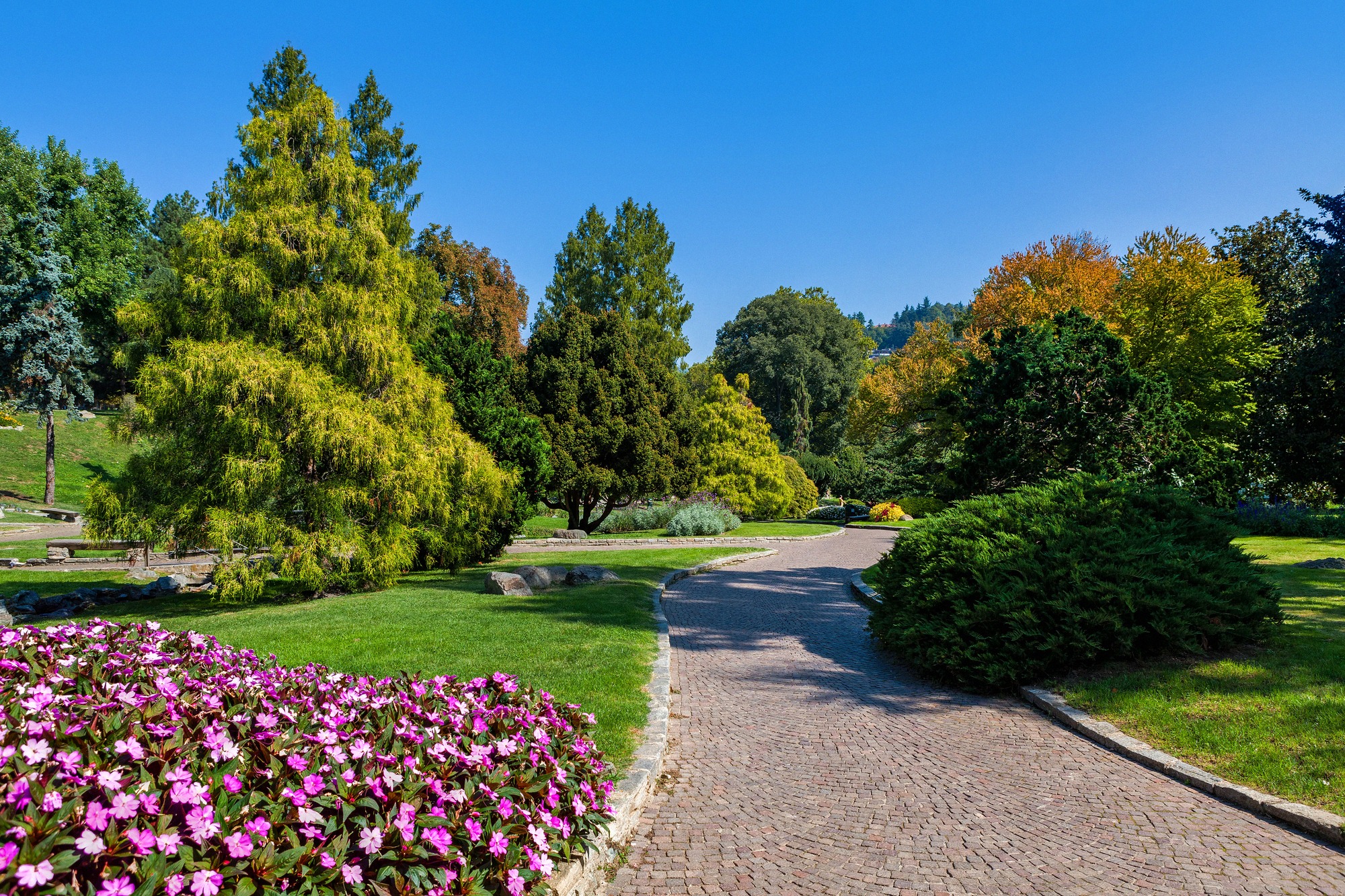
The district between Porta Nuova station and the Po has Turin's synagogue and the Waldensian church, bars and restaurants on Via Madama Cristina and Via Nizza in the evening, and the Valentino park by the river.
Contents
Between the station and the Po
San Salvario begins where the city centre ends, at Corso Vittorio Emanuele II. The railway to Genoa forms its western edge, the Po its eastern one and Corso Bramante its southern one. The district has two very different halves: to the west a dense grid of residential streets around Via Madama Cristina and Via Nizza, to the east, on the left bank of the Po, the Parco del Valentino.
The synagogue stands close to Porta Nuova station, from where Via Roma runs north to Piazza Castello. The line 1 metro stations Marconi and Nizza lie on Via Nizza, and Dante station on Piazza De Amicis is a few steps from the Castello del Valentino. If you stay in San Salvario, you're close to the station and to the bars.
Synagogue and Waldensian church
In the 19th century the Waldensians and the Jewish community both built their centres in San Salvario. The Tempio Valdese has stood at Corso Vittorio Emanuele II 23 since 1853, designed by Luigi Formento with Gothic Revival and Romanesque forms. In June 2015 Pope Francis came here, the first pope ever to visit this church.
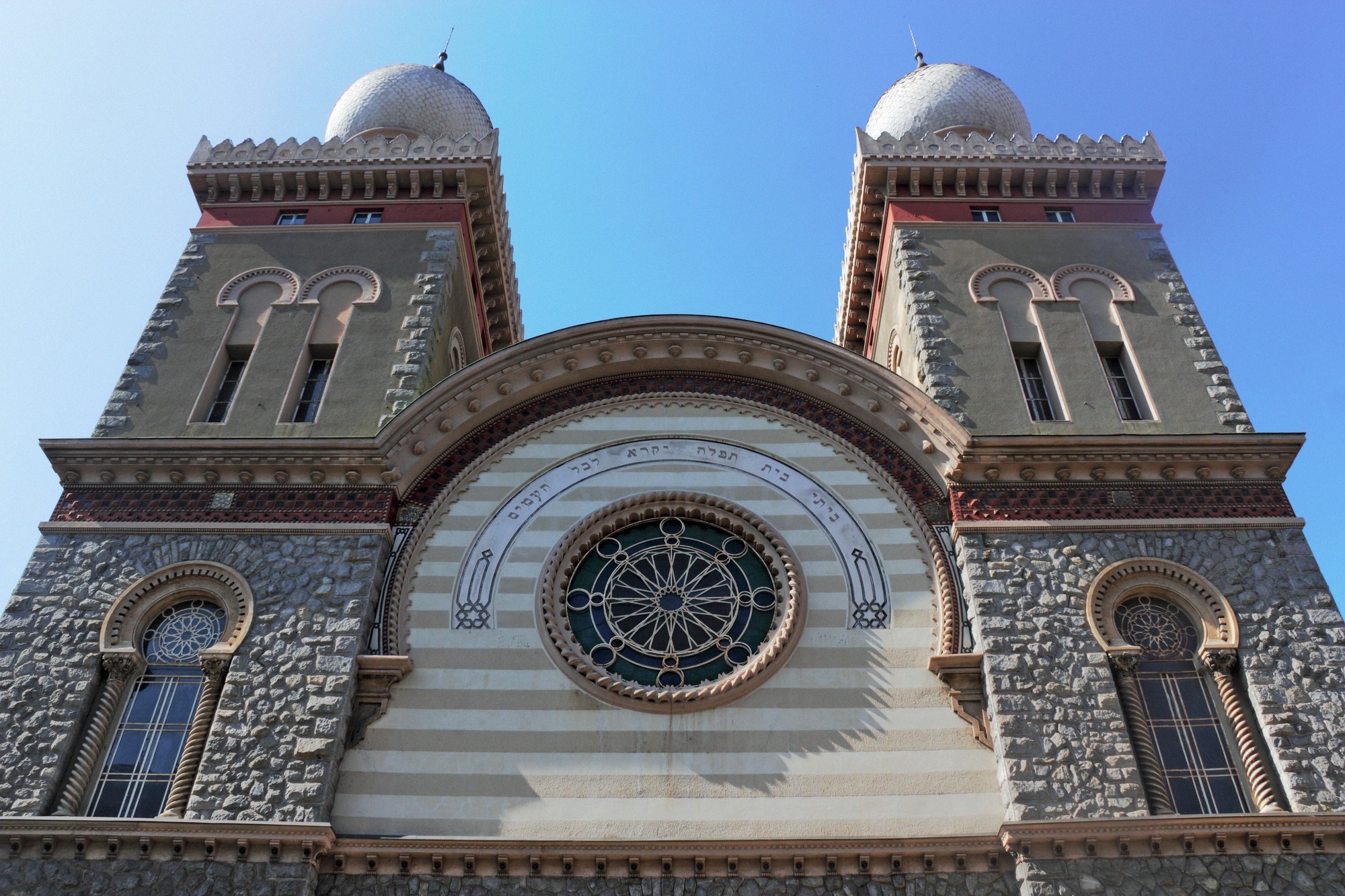
The Jewish community had handed the Antonelli building, today's Mole Antonelliana, over to the city and received a plot outside Porta Nuova in exchange. There, between 1880 and 1884, Enrico Petiti built the synagogue on Piazzetta Primo Levi in an eclectic style with Moorish elements. Via San Pio V is pedestrianised in front of the building for security. Bombing destroyed the interior in 1942. Since 1970 the basement has held the Tempio Piccolo, with Baroque furnishings from Chieri, and an exhibition of ceremonial art. Visits are only possible by reservation and with an authorised guide; the community asks for a voluntary contribution. All rooms are wheelchair accessible, and the community asks you to let it know in advance.
Evenings between Via Madama Cristina and Via Nizza
Since the end of the 20th century San Salvario has been one of the city's nightlife districts. Its core lies between Via Madama Cristina and Via Nizza: pubs, rum bars, bistros, restaurants and rosticcerie, takeaway shops for roast and fried dishes, serving food from many countries, packed into a small area.
The Teatro Colosseo is on Via Madama Cristina, the Cineteatro Baretti on Via Baretti. Street art has appeared on facades in the district since 2015, on the Teatro Colosseo in 2016 for example, and there is a work by Vhils on Via Nizza.
Castello, Esposizioni and museums at the Valentino
You can reach the eastern side, with the Parco del Valentino, on trams 9 and 16 to the Valentino stop on Corso Massimo d'Azeglio, or on foot from Dante metro station. The Castello del Valentino, built between 1630 and 1660 by Carlo and Amedeo di Castellamonte, has been part of the World Heritage site of the Savoy residences since 1997. Today it houses the architecture department of the Politecnico. The Politecnico opens the castle on Saturday mornings for free one-hour guided tours, which you have to book in advance; there are security checks at the entrance and bags are not allowed. In the afternoon the university's botanical garden next door is a good fit. It opens only in season, then on Saturdays from 14:30 and on Sundays and public holidays from 10:00.
The Borgo Medievale, a replica medieval village built for the 1884 national exhibition, has been closed for restoration since January 2024, until 2027. Torino Esposizioni also stands at the Valentino, built in 1938 for a fashion exhibition and extended by Pier Luigi Nervi between 1948 and 1950. It is being converted into the city's new central library to designs by Rafael Moneo. At Corso Massimo d'Azeglio 52 the university shows its museum of anatomy, with the Lombroso museum behind it.
From Madama Cristina's church to the car district
The district takes its name from the church of San Salvario at the corner of Via Nizza and Corso Marconi, originally San Salvatore di Campagna. Madama Cristina, the wife of Vittorio Amedeo I, wanted a church near her summer residence, the Castello del Valentino, and had Amedeo di Castellamonte build it between 1646 and 1653.
Once the city walls came down in 1840, a new middle class moved into the area. The railway to Genoa opened in 1853, and Porta Nuova station was built between 1861 and 1868 to designs by Alessandro Mazzucchetti. Being next to the station shaped the district's shops and workshops. In 1876 the market moved from Piazza Bodoni to Piazza Madama Cristina and soon became the second largest in the city.
Around 1900 San Salvario was Turin's car district. Lancia, Itala and Fiat all started here. Giovanni Battista Ceirano opened a bicycle workshop at Corso Vittorio Emanuele II no. 9 in 1888, and on 19 March 1900 Fiat inaugurated its first factory on Corso Dante. From the 1910s most of the car makers moved away, Fiat to Lingotto. The workshop district became one of department stores, warehouses and craftsmen. On Via Berthollet, Piera Cillario and Pietro Ferrero opened a bakery at the end of the 1930s, before Ferrero returned to Alba.
Associations and the Casa del Quartiere
From the early 1990s many immigrants settled in San Salvario, especially in the streets near Porta Nuova. At first this brought strong social tensions. At the same time dozens of associations were founded, and in 2003 they joined forces in an agency for the district's development. The church of Santi Pietro e Paolo on Largo Saluzzo, completed in 1865, is now a meeting place for worshippers of many backgrounds.
Since 2010 the agency has run the Casa del Quartiere at Via Morgari 14, on the corner of Via Belfiore. The building was a public bathhouse, built in the Art Nouveau style by Camillo Dolza in the first decade of the 20th century; frogs and shells alternate along its cornice. Today it is open seven days a week, with courses, advice, events, a café-restaurant and a courtyard. Next door stands the church of Sacro Cuore di Maria by Carlo Ceppi.