
Piazza San Carlo
Arcaded square with twin churches and an equestrian monument
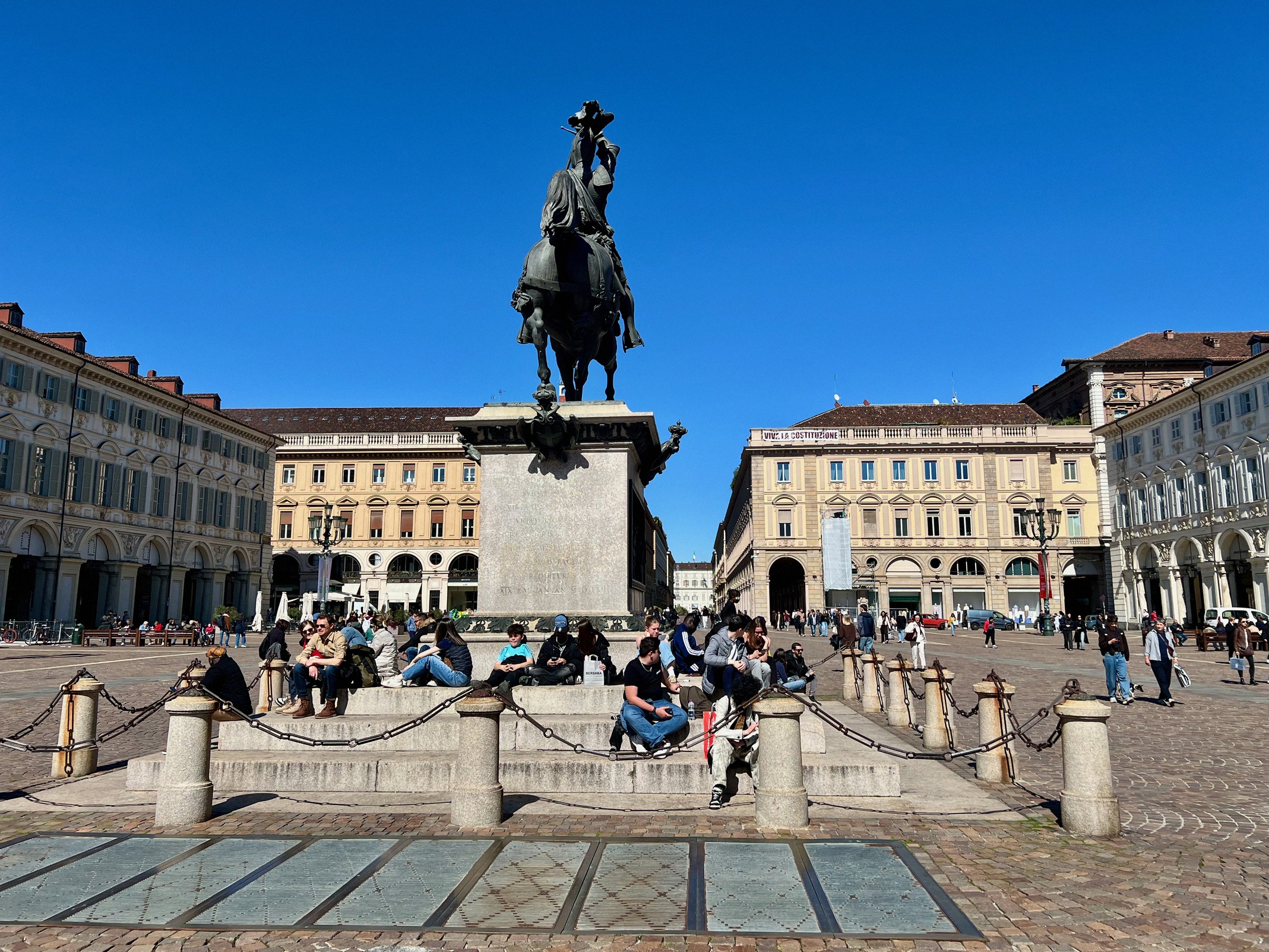
The arcaded square on Via Roma measures 168 by 76 metres. The equestrian monument of Emanuele Filiberto stands in the middle, with the churches of Santa Cristina and San Carlo at the south end.
Contents
Position and size
Via Roma runs from Piazza Castello through Piazza San Carlo to Piazza Carlo Felice. The square is a rectangle of 168 by 76 metres, a little over 12,700 square metres, framed by continuous arcades. Via Santa Teresa and Via Maria Vittoria open onto it from the north, Via Giolitti and Via Alfieri from the south. Locals often call it the drawing room of the city, il salotto della città.
Since 2004 the square has been pedestrianised and paved with porphyry. Building the underground car park beneath it turned up Roman finds, the remains of a bridge from the time of Emanuele Filiberto and an air-raid shelter from the Second World War. Stairs lead from the car park straight onto the square.
From Piazza Reale to drawing room
The architect Carlo di Castellamonte planned the square together with the Contrada Nuova, today's Via Roma, as part of the expansion of the city to the south. In 1638 Madama Cristina di Francia, widow of Vittorio Amedeo I, inaugurated the Piazza Reale, in French Place Royale. The arcades followed only in 1643 to 1646. At first the square served as a market and a stage for the nobility; from around 1650 it was the Piazza d'Armi, where troops assembled. In the middle of the 18th century the Piazza d'Armi moved to today's Piazza Vittorio.
Three cannonballs from the siege of 1706 are still lodged in the façades: one above an arch of Palazzo Solaro del Borgo at No. 183, two beside windows on the corner with Via Alfieri. In 1764 Benedetto Alfieri strengthened the arcade piers so that the buildings above stand safely. The present name comes from the church of San Carlo at the south end.
The equestrian monument
Carlo Marochetti made the monument to Emanuele Filiberto of Savoy. It was unveiled on 4 November 1838, the feast day of St Charles Borromeo, after it had been shown at the Louvre. Locals call it Caval ëd Bronz, the bronze horse.
The duke sheathes his sword after the victory at San Quintino and holds the horse by the reins, so the monument stands for peace rather than war. The base is made of red granite from Baveno. Two reliefs recall the battle of San Quintino in 1557 and the peace of Cateau-Cambrésis in 1559. Bullet holes from 21 and 22 September 1864 survive on the base. On those days people in Turin protested against moving the capital to Florence, and the forces of order used violence against the crowd. A long restoration ended in 2007.
Santa Cristina and San Carlo
At the south end two churches stand side by side, Santa Cristina on the left and San Carlo on the right. They are not copies of each other despite the name: the buildings are of different ages, and over the centuries the churches came to resemble each other.
- Work on San Carlo, the church with the bell tower, began in 1619, at first without a façade. Its present façade by Ferdinando Caronesi dates from 1834.
- Work on Santa Cristina began in 1639 to plans by Castellamonte, also without a façade. Filippo Juvarra designed the façade, built in 1715-1718.
Between the two façades Via Roma continues and widens into Piazza CLN.
Under the arcades
Two historic cafés stand on the square. In front of the entrance of Caffè Torino at No. 204, a small brass bull is set into the paving, the emblem of Turin, placed there by the city in 1930. Stepping on it is said to bring luck. Caffè San Carlo is at No. 156 in Palazzo Turinetti.
The Confetteria Stratta at No. 191 has stood here since 1836. In Palazzo Turinetti the Gallerie d'Italia hold exhibitions. Caffè Caval ëd Bronz at No. 155 and the Paissa grocery at No. 196 are closed.
Vittorio Alfieri rented a flat in 1773 in the house of the Counts Avogadro di Collobiano above the last stretch of arcade before San Carlo. There he wrote his first tragedies between 1774 and 1777. At the corner with Via Alfieri hangs a small picture of the Shroud, recalling the visit of the Archbishop of Milan, Charles Borromeo, in 1578.
At New Year's Eve a stage is set up between the two churches.
Frequently asked questions
What does Caval ëd Bronz mean? +
Are the two churches really twins? +
Can you drive onto the square? +
What is the brass bull in front of Caffè Torino? +
Nearby
Egyptian Museum Turin
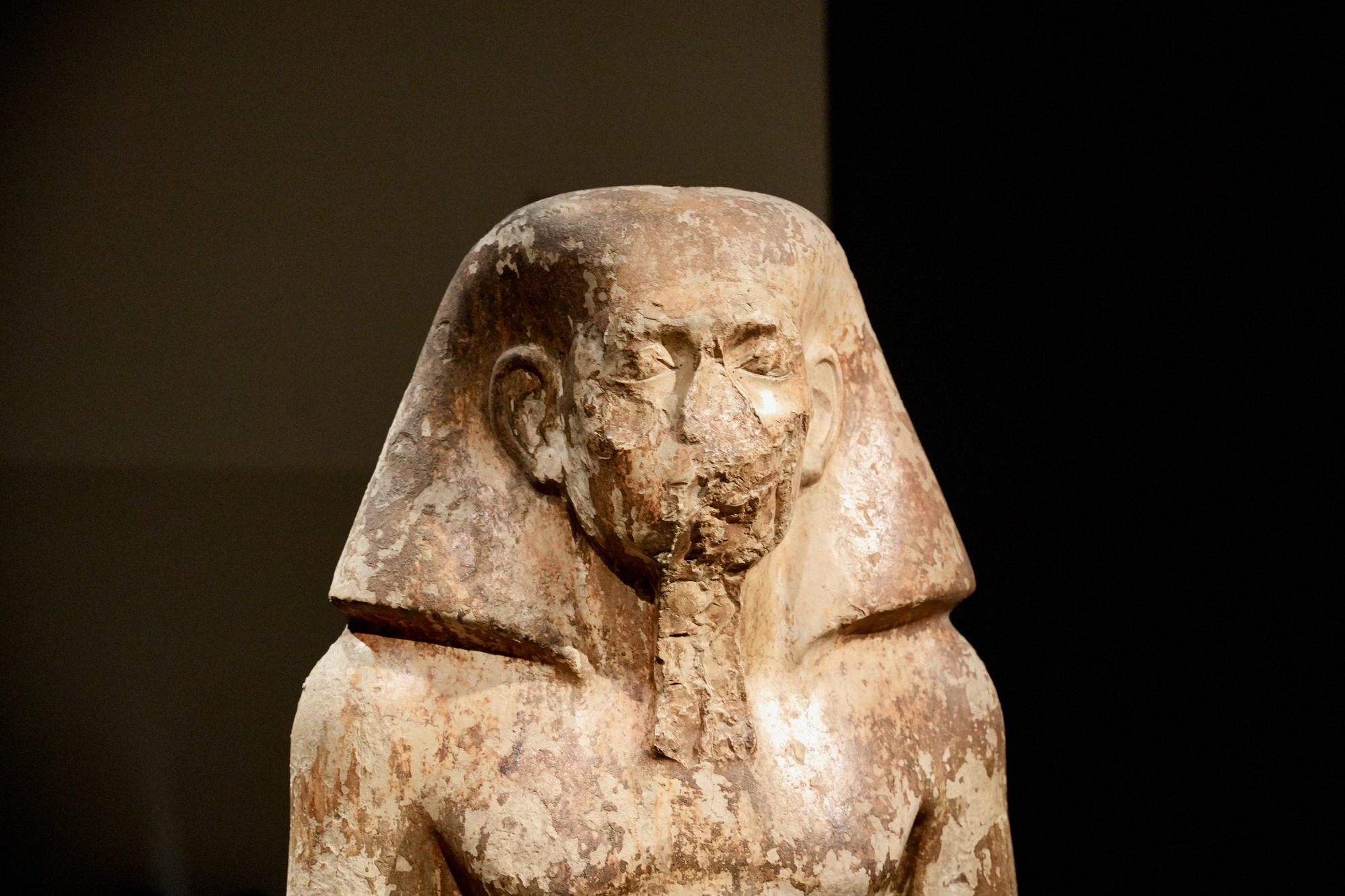
The Museo Egizio shows the Gallery of Kings with Ramesses II, the tomb of Kha and Merit and the rock temple of Ellesiya. Entry only with an online ticket, shorter hours on Mondays.
San Lorenzo
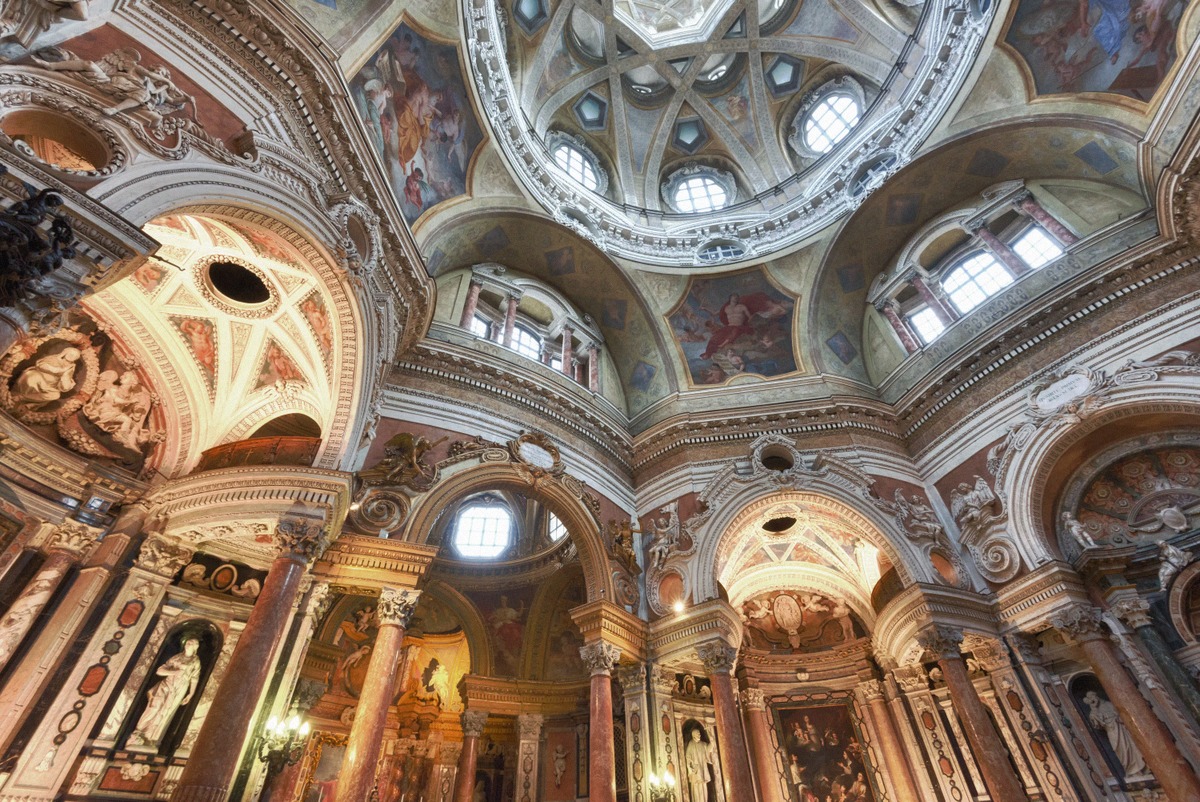
The Real Chiesa di San Lorenzo on Piazza Castello has a dome by Guarino Guarini in which eight pairs of crossing ribs form a star.
Palazzo Madama
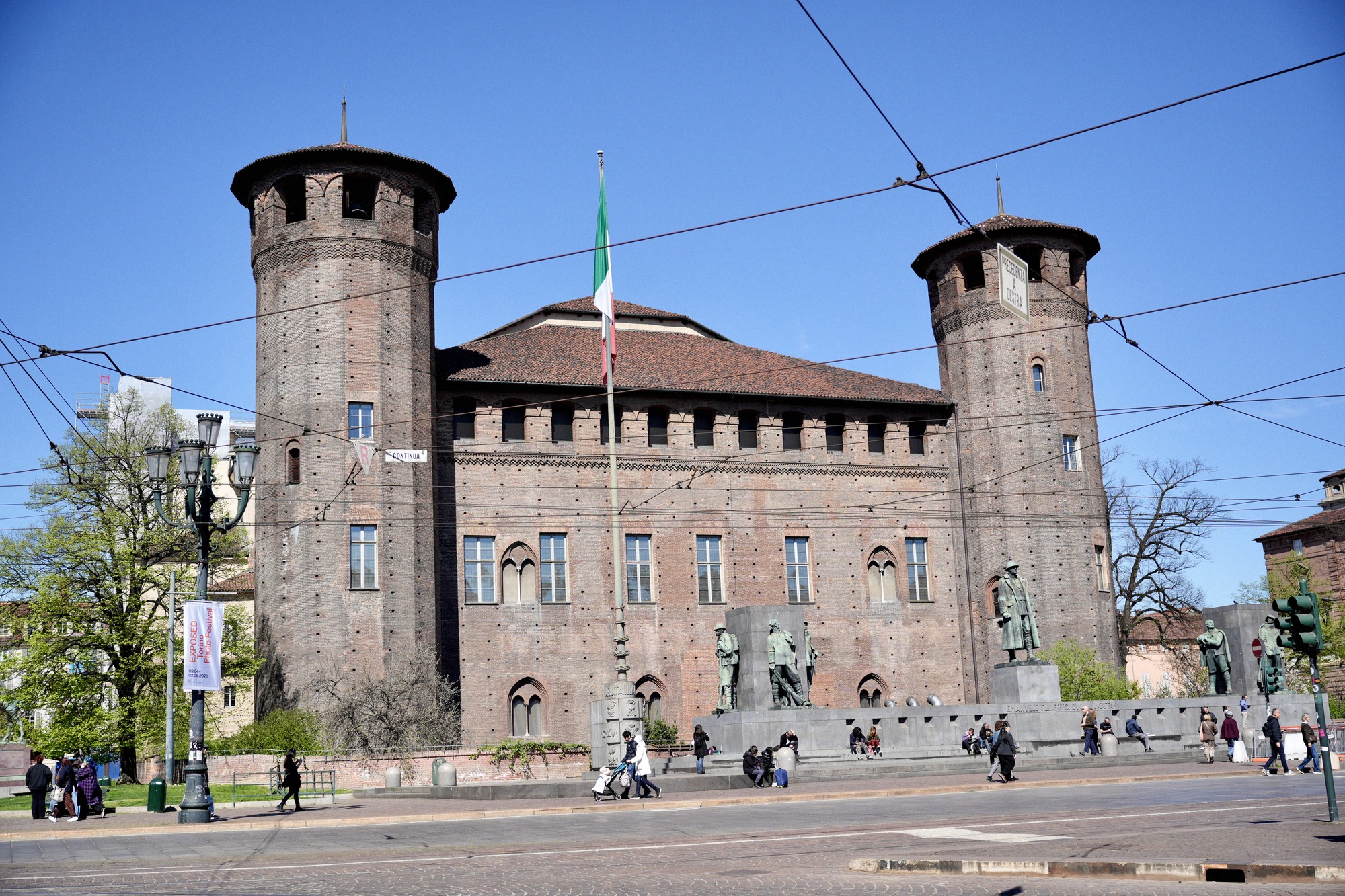
Palazzo Madama stands in the middle of Piazza Castello. It joins a medieval fortress built over a Roman gate to Juvarra's Baroque facade and houses the Museo Civico d'Arte Antica.
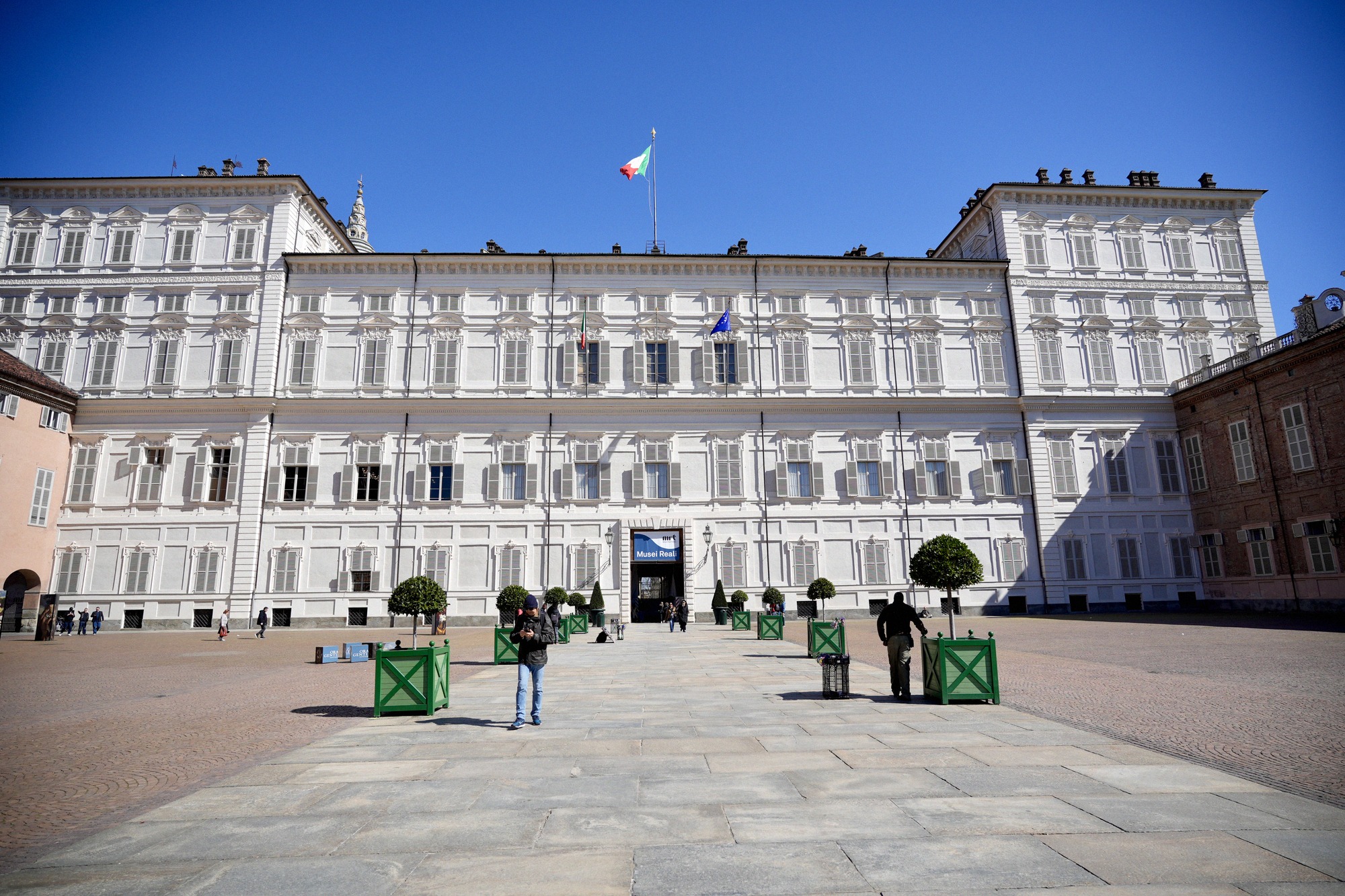
Palazzo Reale
The Palazzo Reale was the residence of the House of Savoy. One ticket covers the state rooms, Royal Armoury, Galleria Sabauda and a section of the Museum of Antiquities, and includes the Cappella della Sindone.
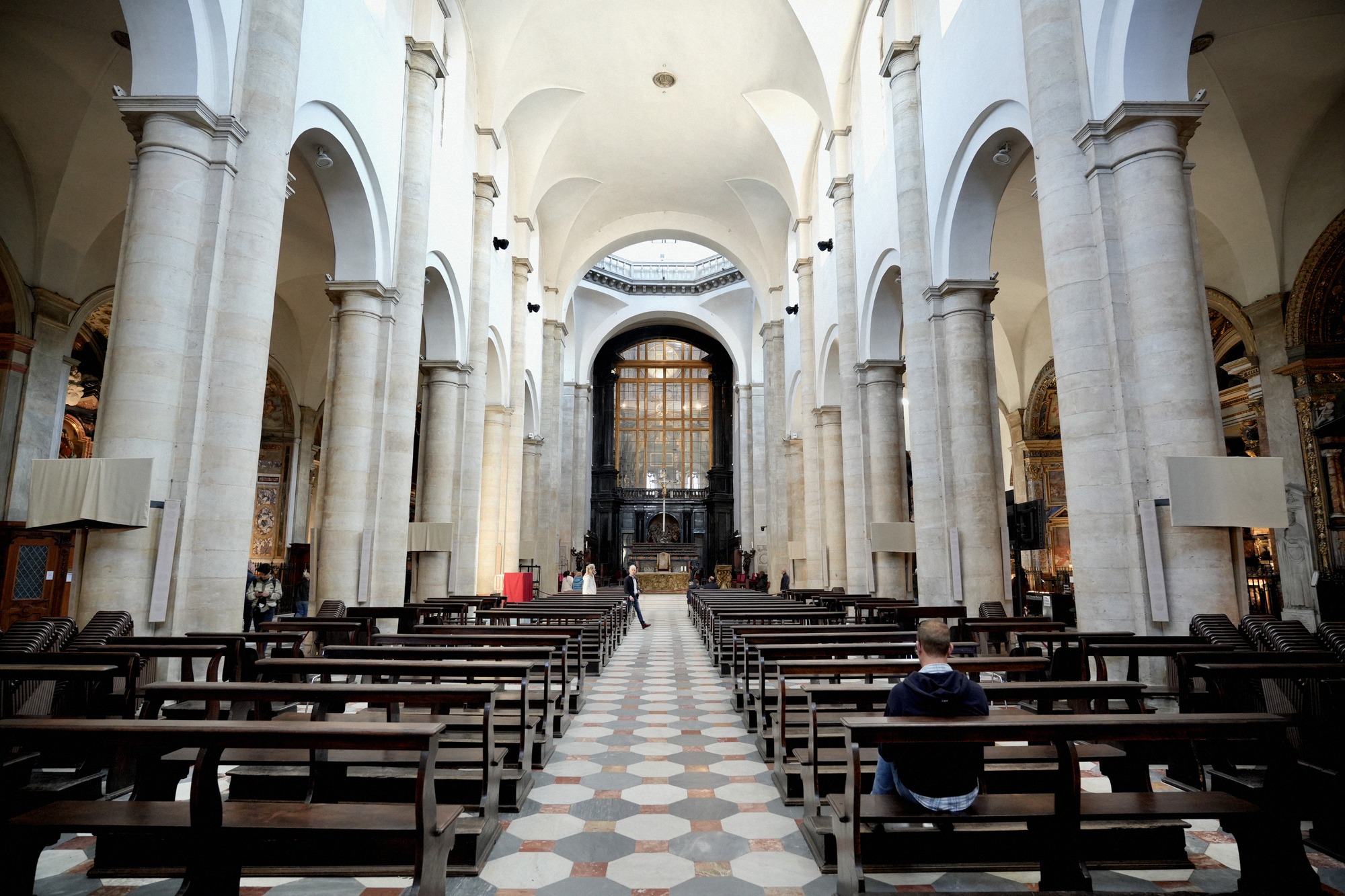
Turin Cathedral
Turin Cathedral is the Cattedrale di San Giovanni Battista from the late 15th century. The Holy Shroud lies in a chapel of the left aisle.
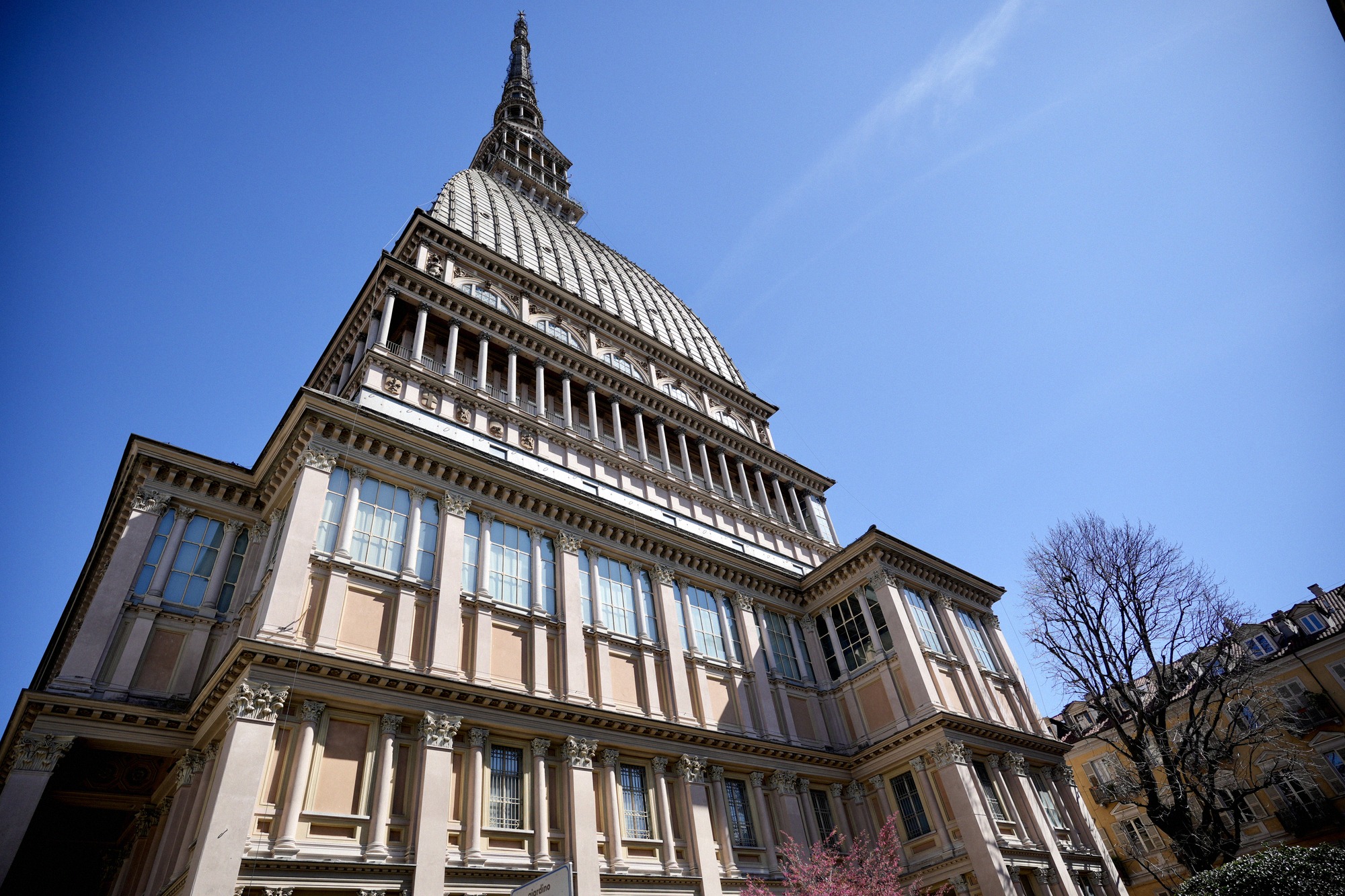
Mole Antonelliana
The Mole houses the National Cinema Museum; a panoramic lift rises through the museum to the terrace at 85 metres. Closed on Tuesdays, with special hours over Christmas.