
Overview
Churches in Turin
The cathedral, San Lorenzo and the Consolata in the centre, Gran Madre across the Po and Superga on the hill: plan your church visits.
No results found.
Contents
Churches in the centre and on the hill
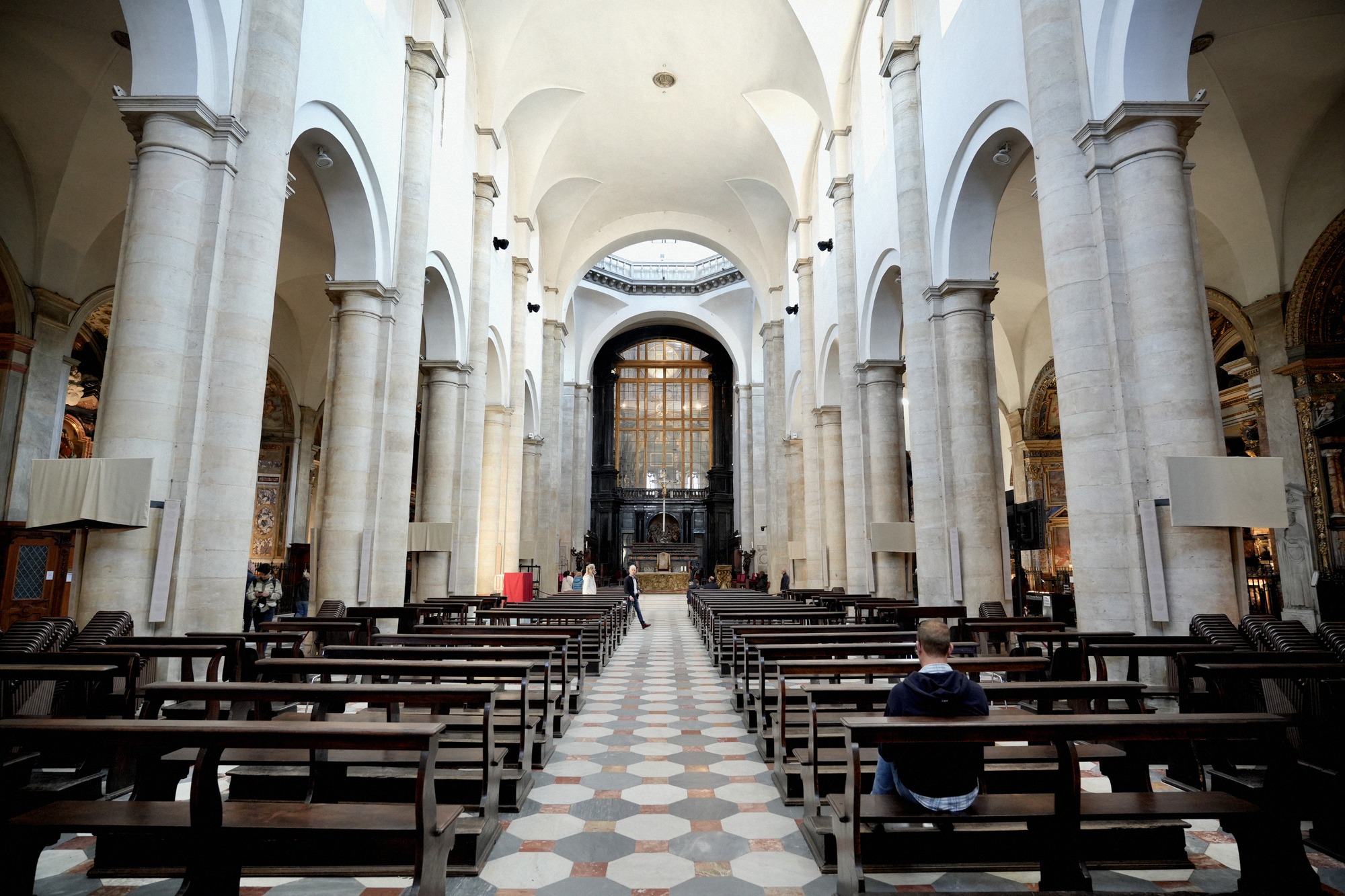
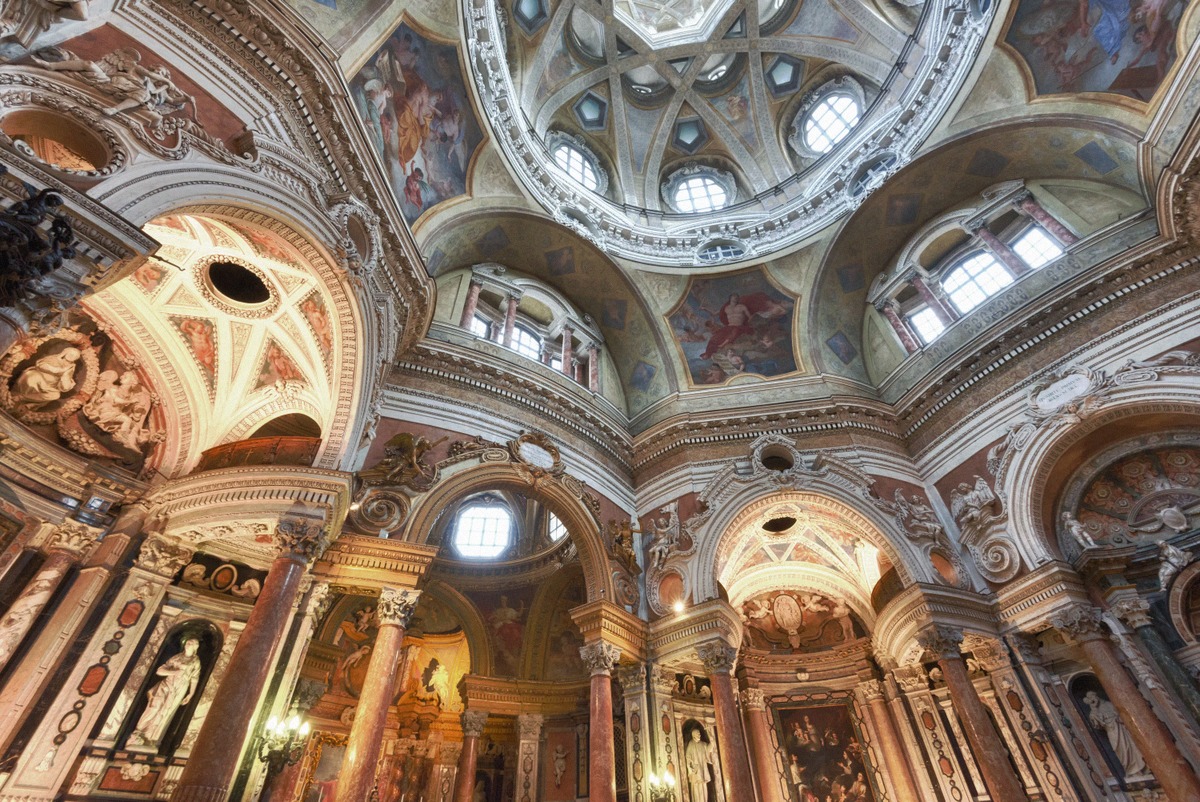
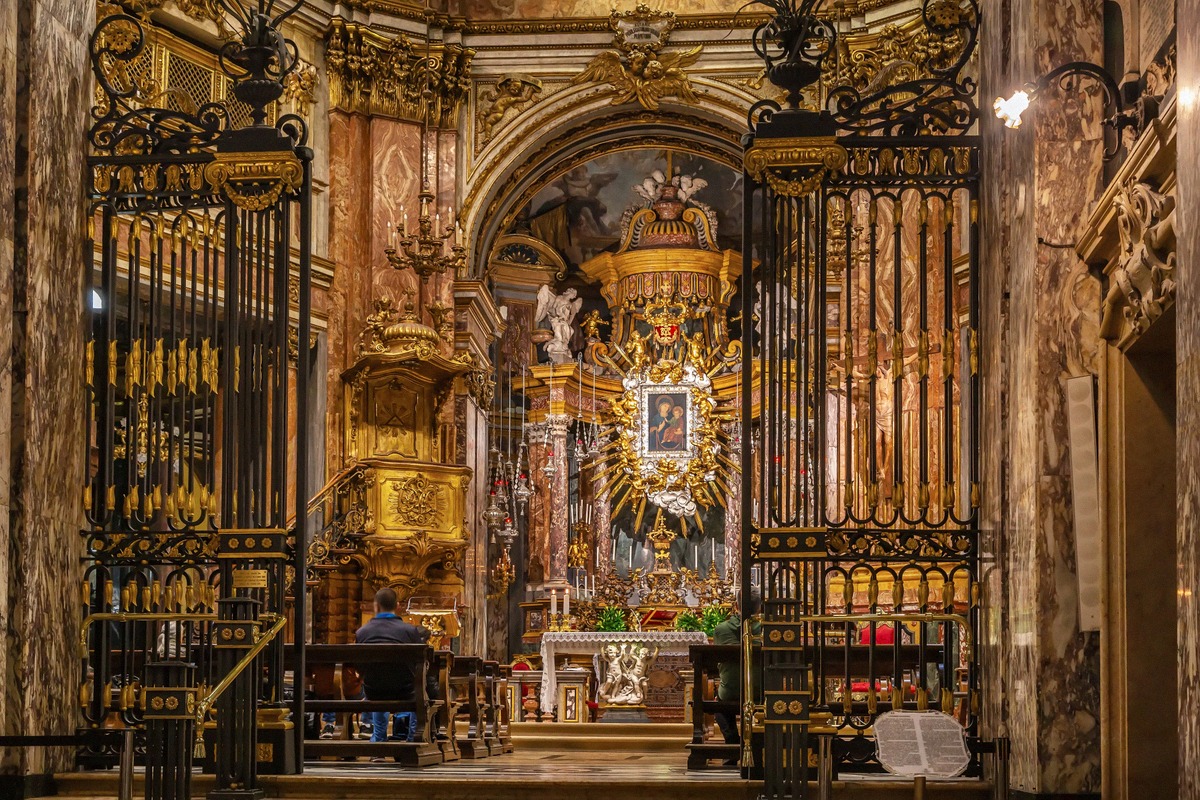
The Cathedral is the only Renaissance church in the city. Meo del Caprino built it in 1491-1498, it was consecrated in 1505, and the Shroud, which came to Turin in 1578, lies here today. Guarino Guarini built the Real Chiesa di San Lorenzo on Piazza Castello from 1668, and its 16 ribs form an eight-pointed star. The Consolata has the only Romanesque building in Turin in its 40-metre bell tower from the 11th century, Guarini began the Baroque rebuilding in 1678, and Juvarra then designed the presbytery and high altar.
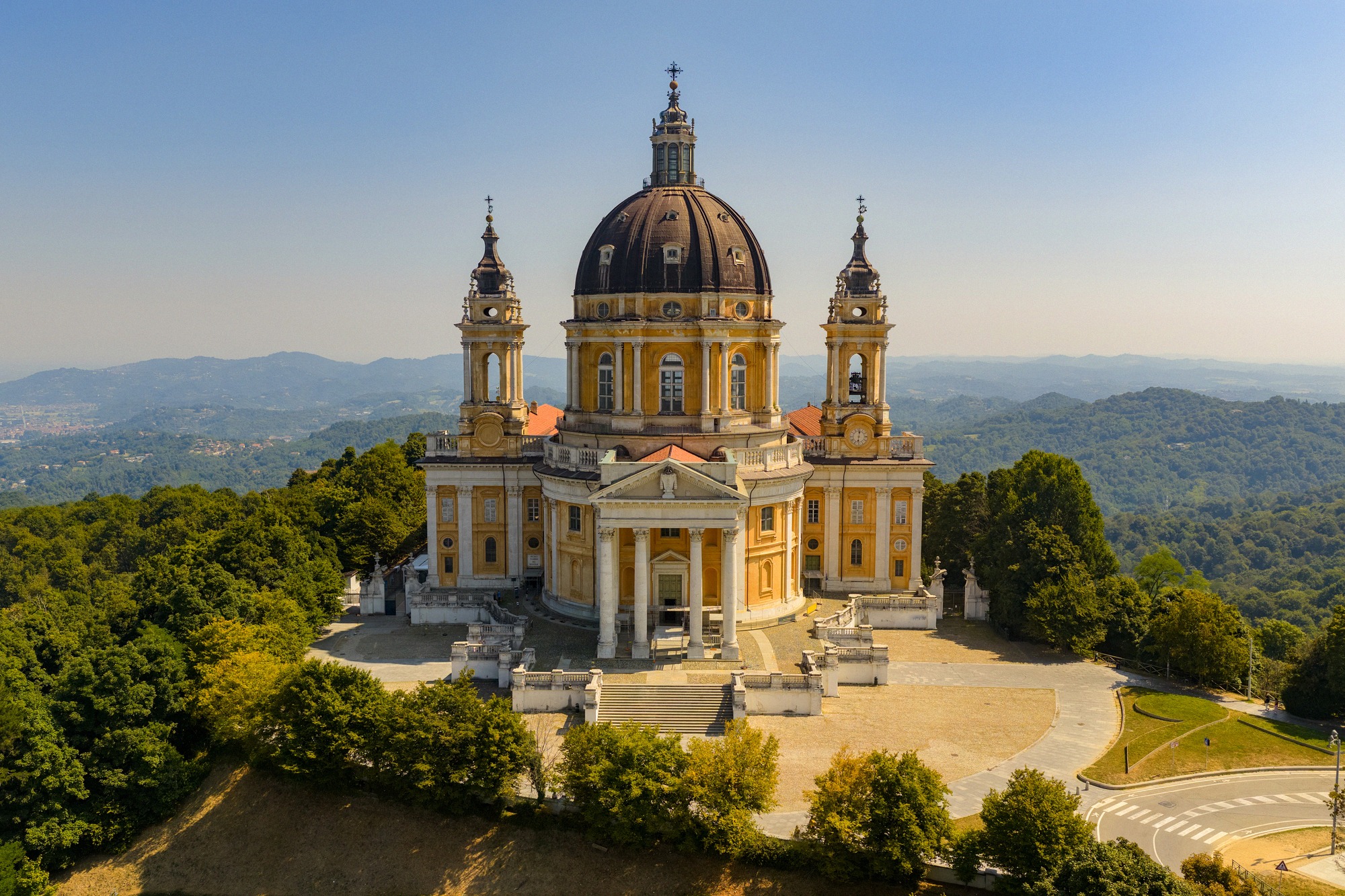
Across the Po stands the Gran Madre di Dio, designed by Ferdinando Bonsignore and consecrated in 1831. It is the only church owned by the city. On the hill north-east of the city stands the Basilica of Superga. Filippo Juvarra built it in 1717-1731, the royal crypt holds four Savoy kings among others, and a plaque at the back commemorates the Grande Torino.
Other churches
San Filippo Neri near the Museo Egizio is the largest place of worship in the city at 69 metres long. Bettino began the building in 1675, Guarini and from 1715 Juvarra later worked on it, and Talucchi designed the interior in 1823-24.
On Piazza San Carlo the twin churches of Santa Cristina and San Carlo close the south side, separated by Via Roma. Juvarra designed the facade of Santa Cristina in 1715-1718, his first work in Turin, while San Carlo was begun in 1619 without a facade and only received one in 1834, by Ferdinando Caronesi, modelled on that of Santa Cristina.
The Basilica of Corpus Domini on Piazza Corpus Domini recalls the miracle of the host, which according to tradition took place on 6 June 1453. Vittozzi began it in 1607. Don Bosco had Maria Ausiliatrice built in Valdocco, it was consecrated in 1868, and his remains lie in the altar chapel.
Order of visits
On foot you can visit the Cathedral, San Lorenzo and the churches on Piazza San Carlo in one stretch in the centre. The Consolata is a short detour west. Gran Madre di Dio lies across the Po, while Superga requires a journey to the hill. These are active places of worship; see their individual guides and the Gran Madre section below for access.
Gran Madre di Dio
Location and view
The Gran Madre di Dio stands in Borgo Po on the right bank, at the end of the Ponte Vittorio Emanuele I. The bridge was built in 1810-1813, has five arches and links Piazza Vittorio Veneto with the small Piazza della Gran Madre di Dio. Piazza Vittorio Veneto is about 31,000 square metres and ends at the river. From there you see the church and, behind it, the Monte dei Cappuccini clearly in front of you.
What it was built for
The Gran Madre is the only church in Turin owned by the city. It was built to celebrate the return of Vittorio Emanuele I on 20 May 1814. An inscription names the occasion and the donor: "Ordo populusque Taurinus ob adventum regis". Ferdinando Bonsignore won the competition. The foundation stone was laid in 1818, then building stopped for about a decade. From 1827 work continued under Carlo Felice, and the church was consecrated in 1831. When Carlo Alberto died in 1849, his body received a last blessing here on 14 October before going to Superga.
The facade
A high plinth carries a broad flight of steps and a pronaos with six front columns, modelled on the Pantheon in Rome. The pediment relief of 1827 is attributed to Francesco Somaini, and San Marco and San Carlo Borromeo stand in the niches. To the side of the steps sit Fede and Religione by Carlo Chelli, made in 1828. The Fede on the left holds a book and a chalice. Reading this figure as a pointer to the Grail comes from esoteric literature, as does the reputation as a temple of Isis, which nothing supports. In front of the church stands the monument to Vittorio Emanuele I by Giuseppe Gaggini, almost ten metres high, begun in 1849, finished in 1869 and put up in 1885. The bell tower beside it dates from 1830.
Interior and crypt
Inside, the Gran Madre is a single-nave rotunda with two porphyry columns at the back. The dome has five rows of octagonal coffers and is made entirely of concrete. Its oculus measures over three metres and on 24 June throws light onto the statue of John the Baptist. Behind the altar stands the Gran Madre statue by Andrea Galassi. The crypt holds the Sacrario for the fallen of the First World War, designed by Giovanni Ricci and inaugurated on 25 October 1932 in the presence of Mussolini.
Visiting and surroundings
Above it in Borgo Po rises the Monte dei Cappuccini, 325 metres high. It carries the church of Santa Maria al Monte, consecrated in 1656, and in the south wing of the convent the Museo Nazionale della Montagna, and from the viewing terrace on top you look out over the city.
The church opens Monday to Saturday from 8:00 to 19:00 and Sunday from 8:00 to 22:00. It is an active parish church, so sightseeing is restricted during services. The crypt memorial has reopened since 5 June 2026.
Frequently asked questions
Which churches in Turin are known for their domes? +
Guarini's dome at San Lorenzo on Piazza Castello has 16 ribs forming an eight-pointed star. The dome of the Basilica of Superga was designed by Juvarra and has two shells.
Where is the Shroud kept? +
In the Cathedral; it has been in Turin since 1578. It lies in the last chapel of the left aisle under the Royal Tribune, kept in a metal box, so you do not see the cloth itself.
Which other churches can I visit in Turin? +
San Filippo Neri, the largest church in the city, the twin churches of Santa Cristina and San Carlo on Piazza San Carlo, the Basilica of Corpus Domini and Maria Ausiliatrice in Valdocco with the remains of Don Bosco.
Which church stands on a hill? +
The Basilica of Superga, on a hill 672 metres high, where Savoy kings are buried. The rack railway to it is closed from 23 November 2026 to 25 March 2027, and details are on the Superga page.