
Historic Cafés & Aperitivo in Turin
Turin's historic cafés run from Al Bicerin (since 1763) to Caffè Torino (since 1903). The bicerin is said to have originated here, and the modern aperitivo is considered to have begun in Turin in 1786.
Contents
The bicerin belongs in Caffè Al Bicerin, the evening aperitivo in Caffè Torino, Mulassano or Caffè San Carlo, and gianduiotti are sold at Baratti & Milano. Six historic cafés can be linked on foot: Al Bicerin on Piazza della Consolata, Caffè Torino and Caffè San Carlo on Piazza San Carlo, Baratti & Milano and Mulassano on Piazza Castello, and Caffè Fiorio on Via Po.
Al Bicerin on Piazza della Consolata
Caffè Al Bicerin stands at Piazza della Consolata 5, directly opposite the main entrance of the Santuario della Consolata. It has existed since 1763, when Giuseppe Dentis opened here. The present building dates from 1856 and was designed by Carlo Promis. For a long time the café was run by women: Ida Cavalli from 1917 to 1971, then Maritè Costa from 1983. Historically the only alcohol served here was vermouth, rosolio and ratafià. In 2001 Gambero Rosso named the café Migliore Bar d'Italia.
The café is open daily from 9:00-19:15, except on Wednesdays. In winter 2026/27 it stays closed on 25 December and 1 January and takes a winter break from 11 to 15 January 2027; it reopens on Saturday 16 January. It is open on the Wednesdays 23 and 30 December 2026 as an exception. Smoking and e-cigarettes are banned both inside and outside.
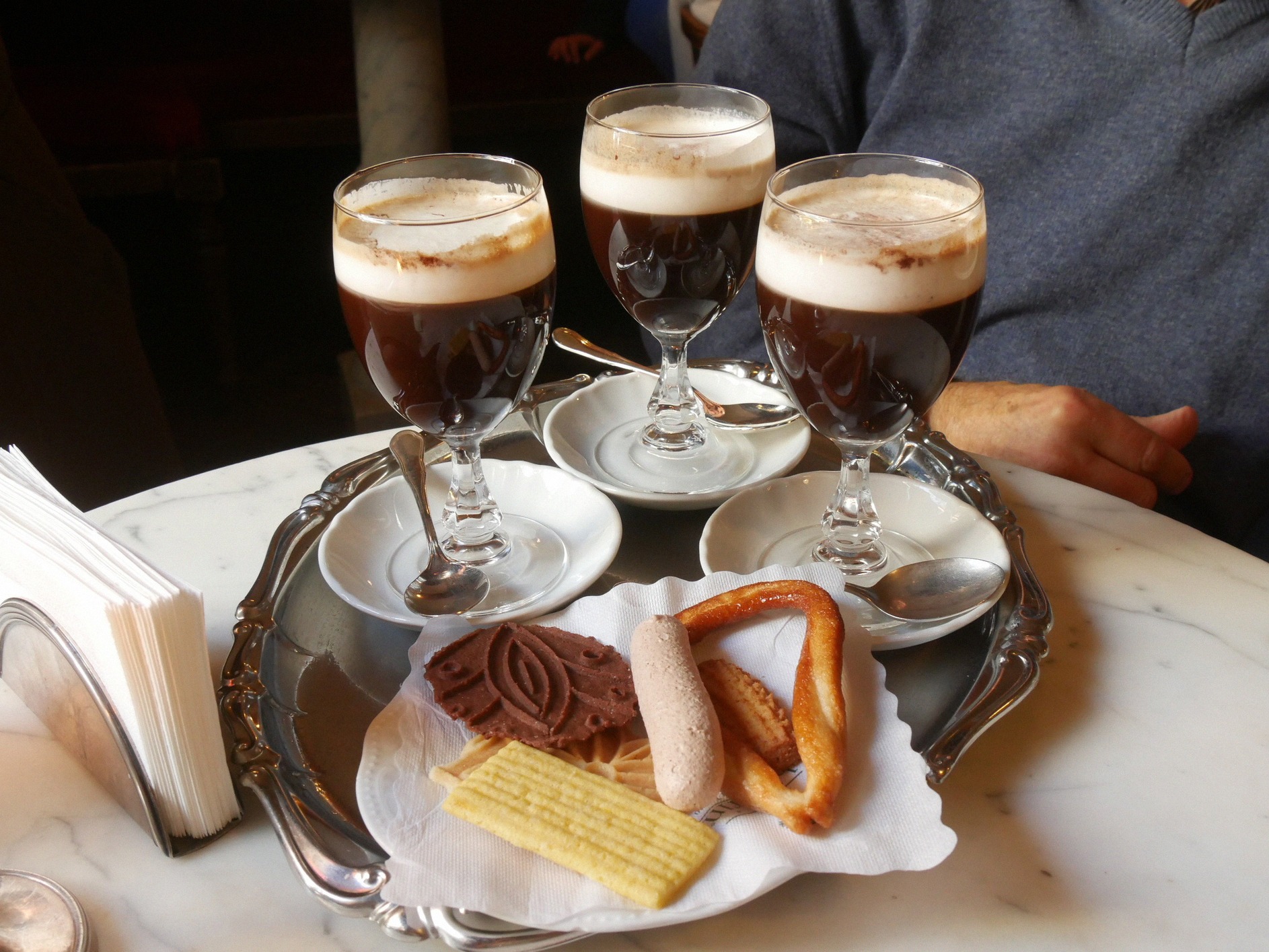
The bicerin
The drink has three ingredients: coffee, drinking chocolate and milk cream. It grew out of the 18th-century bavareisa, made of coffee, chocolate, milk and syrup and served in large glasses. At first the three ingredients came to the table separately. In the 19th century they moved into one glass, in three versions: pur e fiur resembled a cappuccino, pur e barba was coffee with chocolate, and 'n poc 'd tut contained everything. The last one prevailed and gave the drink its name; bicerin is the small glass without a handle.
The glass is not stirred. That way the layers mix only on the palate, with their different temperatures and densities. The chocolate simmers for hours in copper pots, and the quantities of the ingredients remain secret. In 2001 the Piedmont region recognised the bicerin as a traditional product. The café's guests included Cavour, Alexandre Dumas, Friedrich Nietzsche, Giacomo Puccini and Umberto Eco.
Piazza San Carlo: Caffè Torino and Caffè San Carlo
Two cafés stand side by side on Piazza San Carlo. Caffè Torino at number 204 opened in 1903 and is open daily from 7:30-24:00. Caffè San Carlo at number 156 is open daily from 8:30-20:30, so it closes before the late aperitivo. Both serve aperitivo in historic rooms.
Piazza Castello: Baratti & Milano and Mulassano
Baratti & Milano was founded in 1858 by Ferdinando Baratti and Edoardo Milano; their first shop was on Via Dora Grossa, today's Via Garibaldi. The café in the Galleria Subalpina has existed since 1875. It is open Tuesday to Sunday from 9:00-20:00 and closed on Mondays. The restaurant serves lunch from 12:30-14:45, also except on Mondays. You do not need a reservation for the bar. The house makes gianduiotti, cremino and the Caramella Classica, which was shown at the Esposizione Internazionale in 1911.
Caffè Mulassano at Piazza Castello 15 is small. The room measures 31 square metres and is lined with marble, bronze and wood, and a marble water fountain stands on the counter. The shop moved to Piazza Castello in 1907. In 1925 Angela and Onorino Nebiolo took over the café. The tramezzino is said to have been born here, a filled triangular sandwich of soft bread. A plaque in the café commemorates Angela Demichelis Nebiolo and the year 1926. Gabriele D'Annunzio is said to have suggested the name.
Via Po: Caffè Fiorio
Caffè Fiorio at Via Po 8 opened in 1780, which makes it the second oldest of the six cafés on this page after Al Bicerin.
Gianduiotto
The gianduiotto is Turin's chocolate. It was presented at the Turin carnival in 1865 and first made by Caffarel. It is a prism with a triangular base in gold or silver foil, made of hazelnuts, cocoa, cocoa butter and sugar. The story that Napoleon's Continental Blockade triggered it is disputed. It does not have protected IGP status. You can try it at Baratti & Milano.
Aperitivo and vermouth
The modern aperitivo is considered to have originated in Turin in 1786. Antonio Benedetto Carpano, a herbalist, steeped herbs and spices in muscat wine. His shop stood opposite the royal palace on Piazza Castello. A crate is said to have gone to King Vittorio Amedeo III. In 1820 his nephew Giuseppe Bernardino formalised the business as a liqueur and vermouth factory at Piazza Castello 21, under the arcades.
In Turin the aperitivo usually runs between 18:00 and 20:00. With the drink come small bites called stuzzichini: olives, cheese, grissini and, in Turin, also anchovies and tramezzini. They are usually included in the price of the drink, but that depends on the venue. The drinks tend to be light in alcohol. If you want the Turin version, order a vermouth. The historic cafés Torino, Mulassano and San Carlo serve aperitivo in their old rooms.
What belongs on the table in Turin and Piedmont is covered in the overview at Food and Drink.
Visiting
On foot the round leads from Piazza della Consolata via Piazza Castello to Piazza San Carlo. The closing days matter: Al Bicerin is closed on Wednesdays, Baratti & Milano on Mondays.